Kuwait Cultural Evolution: From Bedouin To Modern
<a href="https://kenzadi.com/">Kuwait cultural evolution</a> is a story of adaptation — a small nation that transformed from a maritime trading hub and Bedouin desert society into a <a href="https://v...
Kuwait cultural evolution is a story of adaptation — a small nation that transformed from a maritime trading hub and Bedouin desert society into a modern rentier state, all while retaining a distinct identity. Understanding this evolution requires looking at both the institutions and the daily life of Kuwaitis, from the pre-oil era to the contemporary cultural renaissance.
Quick Answer: Kuwait cultural evolution spans three phases: the pre-oil era shaped by pearling and Bedouin traditions, the oil boom that rapidly modernized society, and a contemporary renaissance driven by cultural institutions, art, and global engagement.
Key Takeaways
- Kuwait's culture developed from two roots: maritime trade and pearling on the Gulf coast, and Bedouin traditions of the desert hinterland.
- The diwaniya, a traditional male gathering space, predates oil and remains a unique social institution in Kuwaiti life.
- Oil discovery in 1938 triggered rapid urbanization and the rise of a rentier welfare state, creating both opportunity and cultural tension.
- Contemporary Kuwait is experiencing a deliberate cultural renaissance, with investment in museums, arts, and public spaces.
- Core values like hospitality, family loyalty, and religious identity have persisted despite dramatic surface-level changes.
Defining "Culture" in the Kuwaiti Context
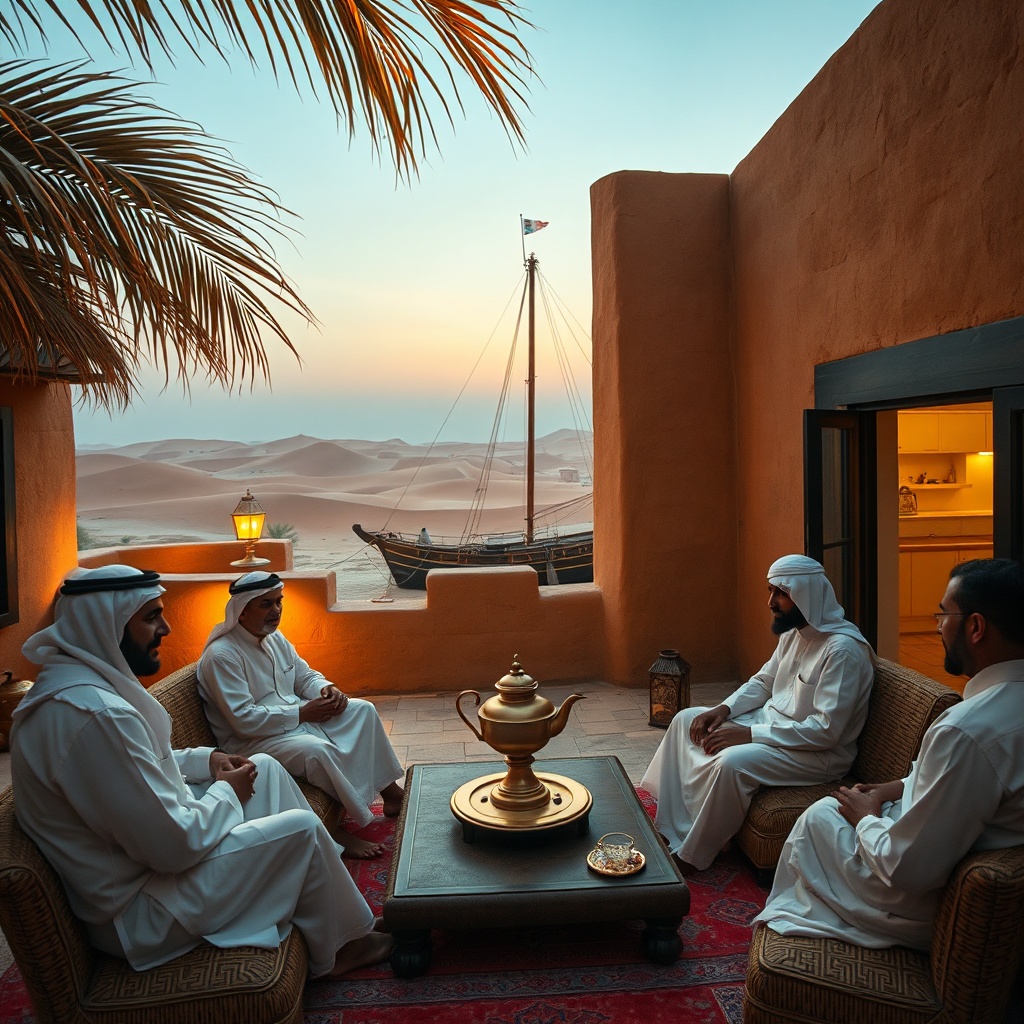
A glimpse into the traditional diwaniya, where maritime trade and Bedouin desert customs shaped early Kuwaiti society.
When assessing Kuwait cultural evolution, it is essential to distinguish between two dimensions of culture. "High culture" refers to the arts, literature, institutions, and formal expressions of identity — the museums, theaters, and publications that a society produces. "Lived culture" refers to the daily practices, family life, social customs, and norms that shape how ordinary people actually live.
Kuwait's evolution must be assessed across both dimensions. A country can build impressive cultural institutions while its lived culture shifts in subtle ways, or vice versa. In Kuwait's case, both dimensions have changed dramatically since the early 20th century, but not always in sync. The formal cultural sector has grown rapidly in recent decades, while everyday social norms have evolved more gradually, shaped by family, religion, and community.
The Role of Geography and History
Kuwait's location on the Persian Gulf shaped its early culture as a maritime trading hub. The natural harbor and coastal position made Kuwait a vital link in regional trade networks, connecting the Arabian Peninsula to Persia, India, and East Africa. This maritime orientation gave Kuwaitis a cosmopolitan outlook and a practical, seafaring culture.
The desert hinterland, meanwhile, influenced Bedouin traditions of hospitality, poetry, and tribal loyalty. The Bedouin heritage of the region emphasized generosity to guests, oral poetry as a form of expression and social commentary, and strong kinship bonds. Together, these two influences created a distinctive social fabric that still underlies Kuwaiti customs and social norms today.
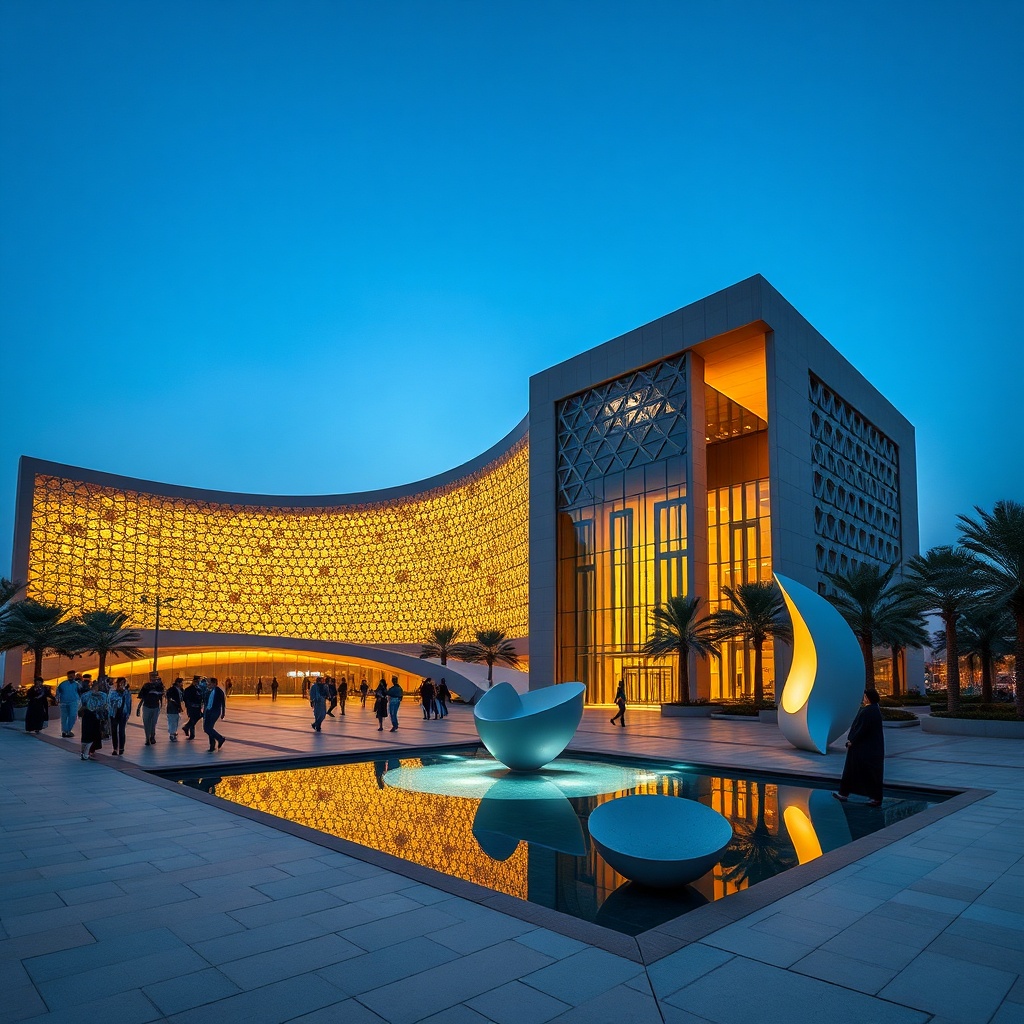
A contemporary cultural landmark that embodies Kuwait's ongoing cultural renaissance, blending tradition with global engagement.
The Pre-Oil Era: Pearling, Trade, and Bedouin Roots
The pre-oil economy created a social fabric that still influences modern Kuwait — this is not merely a distant past but a foundation that shaped the Kuwaiti character. The pearling industry was the economic and social backbone of early Kuwait. For centuries, pearl diving provided income, defined seasonal rhythms, and organized communities around the sea.
The dhow, a traditional wooden sailing vessel, was central to Kuwait's maritime trade routes. These boats connected Kuwait to East Africa, Persia, and India, carrying dates, pearls, and other goods. The skills of navigation, shipbuilding, and seamanship were passed down through generations, creating a specialized maritime culture.
Bedouin cultural elements were equally important. Nabati poetry, a form of vernacular Arabic poetry, served as a medium for storytelling, social critique, and tribal history. Oral storytelling and the diwaniya — a traditional gathering space — reinforced social bonds and community decision-making. The tribal social organization provided a framework for loyalty, protection, and mutual support.
Definition: The diwaniya is a traditional male gathering space in Kuwaiti culture, typically held in a dedicated room or tent, where men meet for conversation, social networking, and discussion of community matters.
The Diwaniya as a Cultural Institution
The diwaniya predates the oil era and remains one of Kuwait's most distinctive cultural institutions. It is a dedicated space, often in a private home, where men gather regularly to talk, drink coffee, and discuss everything from family matters to politics. In the pre-oil era, the diwaniya served as a primary venue for social networking, political discussion, and community decision-making.
The diwaniya has evolved but remains a unique feature of Kuwaiti social life. Today, diwaniyas still exist in many Kuwaiti homes, but they coexist with cafes, social media, and public events. The institution has adapted to modern life while preserving its core function: bringing people together in a relaxed, informal setting. For many Kuwaitis, the diwaniya is where relationships are built and community ties are maintained.
Maritime Traditions and Their Legacy
The culture of the sea in Kuwait encompassed fishing, pearl diving, and shipbuilding. These activities created a social hierarchy and a set of skills associated with maritime life. Divers, captains, and crew members each had defined roles, and the success of a pearling season depended on collective effort.
These traditions are preserved today in museums and festivals. The Kuwaiti maritime heritage is celebrated through exhibits of traditional dhows, displays of pearl diving equipment, and cultural events that recreate the rhythms of the sea. While the pearling industry itself has long disappeared, the legacy of the sea remains a powerful symbol of Kuwaiti identity and resilience.
The Oil Boom Transformation: From Trading Post to Modern City
The oil era brought a cultural "shock" — a rapid transformation that created both opportunity and cultural tension. The discovery of oil in 1938 and the subsequent exploitation of Kuwait's petroleum reserves transformed the economy almost overnight. Kuwait City grew from a modest trading post into a modern urban center, and the country shifted from a pearling and trading economy to a rentier welfare state.
This transformation affected every aspect of life. Education, healthcare, and infrastructure expanded rapidly, funded by oil revenues. The state became the primary provider of services and employment, reshaping family life and social roles. The shift from a maritime economy to a state-driven economy changed how Kuwaitis lived, worked, and related to each other.
Quick Answer: The discovery of oil in 1938 transformed Kuwait from a pearling and trading economy into a rentier welfare state, rapidly modernizing the country while creating new tensions between tradition and change.
The New Urban Social Order
The move from mud-brick houses to modern villas and apartment buildings changed the physical landscape of Kuwait City. Traditional courtyard houses with wind towers gave way to Western-style villas, high-rise buildings, and planned neighborhoods. This architectural shift reflected broader changes in lifestyle and social organization.
The changing role of women in public life and the workforce was another significant development. With the expansion of education and the state sector, women gained increased access to schooling and employment. Kuwaiti women gradually moved into professional roles, though the pace of change varied across different segments of society.
The rise of a new middle class and the emergence of a consumer culture were also products of the oil boom. With rising incomes, Kuwaitis gained access to modern goods, services, and entertainment. This consumer culture created new social distinctions and opportunities, while also challenging traditional values and practices.
The Preservation of Identity Amidst Rapid Change
Kuwaitis responded to the cultural shock of modernization in various ways. Some embraced the changes, while others sought to preserve traditional practices and values. The establishment of heritage institutions was a key response, serving as a counterbalance to rapid change.
The state played a central role in promoting Kuwaiti identity and national pride. Through museums, cultural centers, and educational programs, the government sought to preserve and celebrate Kuwaiti heritage. These efforts helped maintain a sense of continuity and identity even as the country underwent profound transformation.
The Contemporary Cultural Renaissance: Museums, Arts, and Global Engagement
Kuwait's current cultural scene is best understood as a deliberate, institutional renaissance rather than a passive byproduct of globalization. In recent years, the country has invested significantly in cultural infrastructure, including the Sheikh Jaber Al-Ahmad Cultural Centre, Al Shaheed Park, and a new cultural district in Kuwait City. These spaces provide venues for music, theater, art, and public events.
The growth of contemporary Kuwaiti art, film, and literature has been equally notable. Kuwaiti artists are producing work that engages with both local traditions and global trends, while filmmakers and writers are exploring themes of identity, memory, and social change. Global cultural exchange has also expanded, with Kuwaiti artists and institutions participating in international exhibitions, residencies, and collaborations.
Quick Answer: Kuwait's contemporary cultural renaissance is driven by deliberate institutional investment — museums, cultural centers, and public spaces — alongside the growth of contemporary art, film, and literature by a new generation of Kuwaiti creators.
The Role of Cultural Institutions
Cultural centers and institutions are shaping contemporary Kuwaiti identity in significant ways. The Sheikh Jaber Al-Ahmad Cultural Centre, for example, hosts concerts, performances, and events that bring together diverse audiences. Al Shaheed Park offers a green space for public gatherings, art installations, and community programming. These institutions create opportunities for cultural expression and community engagement.
Public spaces are particularly important for fostering cultural life. When a city invests in parks, plazas, and cultural venues, it creates environments where people can gather, share experiences, and develop a sense of community. In Kuwait, these spaces are helping to build a contemporary cultural identity that is both rooted in tradition and open to the world.
A Step-by-Step Look at How Kuwait's Cultural Renaissance Is Unfolding
- Post-1990 rebuilding: After the Gulf War, efforts began to restore and re-establish cultural institutions that had been damaged or disrupted.
- Heritage documentation: Systematic work to record and preserve oral histories, traditional crafts, and architecture has helped safeguard Kuwait's cultural memory.
- Institutional investment: State and private investment in cultural infrastructure — including museums, theaters, and cultural centers — has created physical spaces for cultural activity.
- International engagement: Kuwaiti artists and institutions participate in regional and global cultural events, connecting Kuwait to broader artistic networks.
- Digital preservation: The use of digital media and archives makes heritage accessible to a broader audience, both within Kuwait and internationally.
- Next-generation leadership: Young Kuwaitis are taking on leadership roles in cultural production and advocacy, bringing fresh perspectives and energy to the cultural sector.
Comparing Traditional and Contemporary Kuwaiti Culture
A direct comparison between the pre-oil era and the contemporary period reveals what has changed and what has persisted. The table below clarifies the evolution across key cultural dimensions.
Comparison Table: Traditional vs. Contemporary Kuwaiti Culture
| Cultural Dimension | Traditional (Pre-Oil Era) | Contemporary (Post-Renaissance Era) |
|---|---|---|
| Economy | Pearling, fishing, and trade | Oil-based rentier economy with a growing private sector |
| Social Gathering | Diwaniya as a primary social institution | Diwaniya persists but coexists with cafes, social media, and public events |
| Women's Role | Primarily domestic and family-centered | Increasingly present in education, workforce, and public life |
| Artistic Expression | Nabati poetry, oral storytelling, traditional crafts | Contemporary art, film, literature, and digital media |
| Architecture | Mud-brick houses, courtyards, and wind towers | Modern villas, high-rise buildings, and designed public spaces |
| Cultural Preservation | Embedded in daily practice and oral tradition | Institutionalized in museums, archives, and heritage programs |
What Has Persisted vs. What Has Transformed
Analyzing the table reveals clear patterns. The economy has changed most dramatically, shifting from a maritime and pearling base to an oil-driven rentier system. Artistic expression has also transformed significantly, moving from oral and craft traditions to contemporary art, film, and digital media.
However, some elements have persisted. The diwaniya, while no longer the sole social institution, remains a vital part of Kuwaiti social life. Core values like hospitality, family loyalty, and religious identity continue to shape daily life, even as surface-level practices have changed. Kuwaiti customs and social norms have evolved, but the underlying cultural fabric remains strong.
The Future of Kuwaiti Cultural Evolution: Challenges and Opportunities
Looking forward, Kuwait cultural evolution will be shaped by tensions and opportunities that are already visible. The challenge of balancing global influence with national identity is one of the most pressing. As Kuwaitis engage more with international culture through media, travel, and education, the question of what it means to be Kuwaiti becomes more complex.
Digital media and technology are playing a growing role in shaping a new generation's cultural expression. Young Kuwaitis are using social media, streaming platforms, and digital tools to create and consume culture in ways that differ from their parents' experience. This creates both opportunities for creative expression and challenges for preserving traditional practices.
The potential for Kuwait to become a leading cultural hub in the Gulf region is significant. With its existing cultural institutions, growing artistic community, and strategic location, Kuwait has the foundation to play a major role in the regional cultural landscape.
Navigating Generational Differences
The gap between older generations who experienced the pre-oil era and younger generations who are digital natives is a defining feature of contemporary Kuwait. Older Kuwaitis may remember the pearling economy, the diwaniya as a central social institution, and a more homogeneous society. Younger Kuwaitis have grown up with the internet, global media, and a more diverse cultural landscape.
This generational divide affects cultural production and consumption. Younger Kuwaitis are more likely to engage with global cultural trends, while older generations may prioritize traditional practices. The challenge is to create a cultural conversation that bridges this gap, allowing both generations to contribute to Kuwait's evolving identity.
Balancing Heritage and Innovation
One of the key risks in cultural preservation is the "museumification" of heritage — turning traditions into static exhibits rather than living, evolving practices. Kuwait faces the challenge of keeping heritage relevant to modern life without freezing it in the past.
Strategies for integrating heritage into modern life include incorporating traditional elements into contemporary art and design, using digital media to make heritage accessible, and creating spaces where cultural practices can be experienced and adapted. The goal is to maintain cultural continuity while allowing for innovation and change.
Frequently Asked Questions (FAQ)
How has Kuwait's culture changed since the discovery of oil?
The discovery of oil in 1938 transformed Kuwait from a pearling and trading economy into a rentier welfare state. This shift brought rapid urbanization, modernization of infrastructure, and changes in education, healthcare, and social roles. While many traditional practices have persisted, the cultural landscape has evolved significantly.
What is the diwaniya and why is it important in Kuwaiti culture?
The diwaniya is a traditional male gathering space, typically held in a dedicated room or tent, where men meet for conversation, social networking, and community discussion. It predates the oil era and remains a unique feature of Kuwaiti social life, serving as a venue for building relationships and maintaining community ties.
How is Kuwait preserving its traditional culture today?
Kuwait preserves its traditional culture through heritage institutions, museums, and cultural programs. The state and private sector have invested in cultural infrastructure, while documentation efforts record oral histories, traditional crafts, and architecture. Digital preservation also makes heritage accessible to a broader audience.
What role does religion play in Kuwait's cultural evolution?
Religion, particularly Islam, has been a consistent and central element of Kuwaiti identity throughout the country's evolution. While modern life has brought changes to social practices, religious identity remains a strong and stable force in Kuwaiti culture, providing continuity amid broader transformations.
Is Kuwait becoming more or less traditional as it modernizes?
Kuwait is becoming more modern in terms of infrastructure, economy, and cultural institutions, but many traditional values and practices persist. The diwaniya, hospitality, family loyalty, and religious identity remain strong. The cultural evolution involves both change and continuity, with new forms of expression coexisting with traditional practices.
Related reading: 7 Top Souks In Kuwait · From Tradition To Modern: Kuwait City's Modern Culture
Conclusion
Kuwait cultural evolution can be understood through a three-phase framework: the pre-oil era shaped by pearling, trade, and Bedouin traditions; the oil boom transformation that rapidly modernized society; and the contemporary renaissance driven by cultural institutions, art, and global engagement. Each phase has built upon the previous one, creating a culture that is both rooted in tradition and open to change.
The process is ongoing and dynamic — not a finished story. Kuwait continues to navigate the tensions between heritage and innovation, tradition and modernity, local identity and global influence. The next chapter will be written by the generation now coming of age, who will shape Kuwait's cultural evolution in ways that reflect their own experiences and aspirations.
Kuwait's cultural evolution is a testament to how a small nation can navigate profound change while maintaining a distinct identity. The journey from Bedouin and maritime roots to a modern cultural hub is far from complete, but the foundation is strong.
Related Articles
Kuwait City Desert Day Trip: Tour Vs Self-Drive
A Kuwait City desert day trip is a guided or self-driven excursion into the surrounding dunes that combines off-road adventure, cultural experiences, and the raw landscape of the Arabian Peninsula — t...
Kuwaiti Culture: From Majlis To Modernity
<a href="https://kenzadi.com/">Kuwaiti culture</a> is a distinctive blend of deep-rooted Bedouin traditions, Islamic values, and a cosmopolitan outlook shaped by centuries of maritime trade and oil-er...
Kuwait City Vs Dubai: Which City Fits You Best?
Introduction...