Kuwaiti Culture: From Majlis To Modernity
<a href="https://kenzadi.com/">Kuwaiti culture</a> is a distinctive blend of deep-rooted Bedouin traditions, Islamic values, and a cosmopolitan outlook shaped by centuries of maritime trade and oil-er...
Kuwaiti culture is a distinctive blend of deep-rooted Bedouin traditions, Islamic values, and a cosmopolitan outlook shaped by centuries of maritime trade and oil-era wealth. It is a culture where the ancient rituals of the desert meet the fast-paced rhythms of a modern city-state, creating a social landscape that is both deeply traditional and remarkably open to the world.
Quick Answer: Kuwaiti culture is a unique fusion of Bedouin heritage, Islamic principles, and modern cosmopolitan influences, with the Majlis serving as its central social institution and hospitality as its most sacred duty.
Key Takeaways
- Kuwaiti culture is a unique fusion of deep-rooted Bedouin traditions, Islamic values, and a modern, cosmopolitan outlook shaped by its mercantile history.
- The Majlis is not just a room; it is the central social institution where hospitality, politics, and family bonding occur.
- Hospitality is a sacred duty in Kuwait, expressed through the ritual of Arabic coffee (Gahwa) and dates.
- Navigating Kuwaiti culture requires an understanding of indirect communication and the importance of honorifics and respect.
- While modernization and social media are reshaping youth culture, traditional practices like Sadu weaving and the Majlis remain fiercely preserved.
The Complete Answer: What Is Kuwaiti Culture?
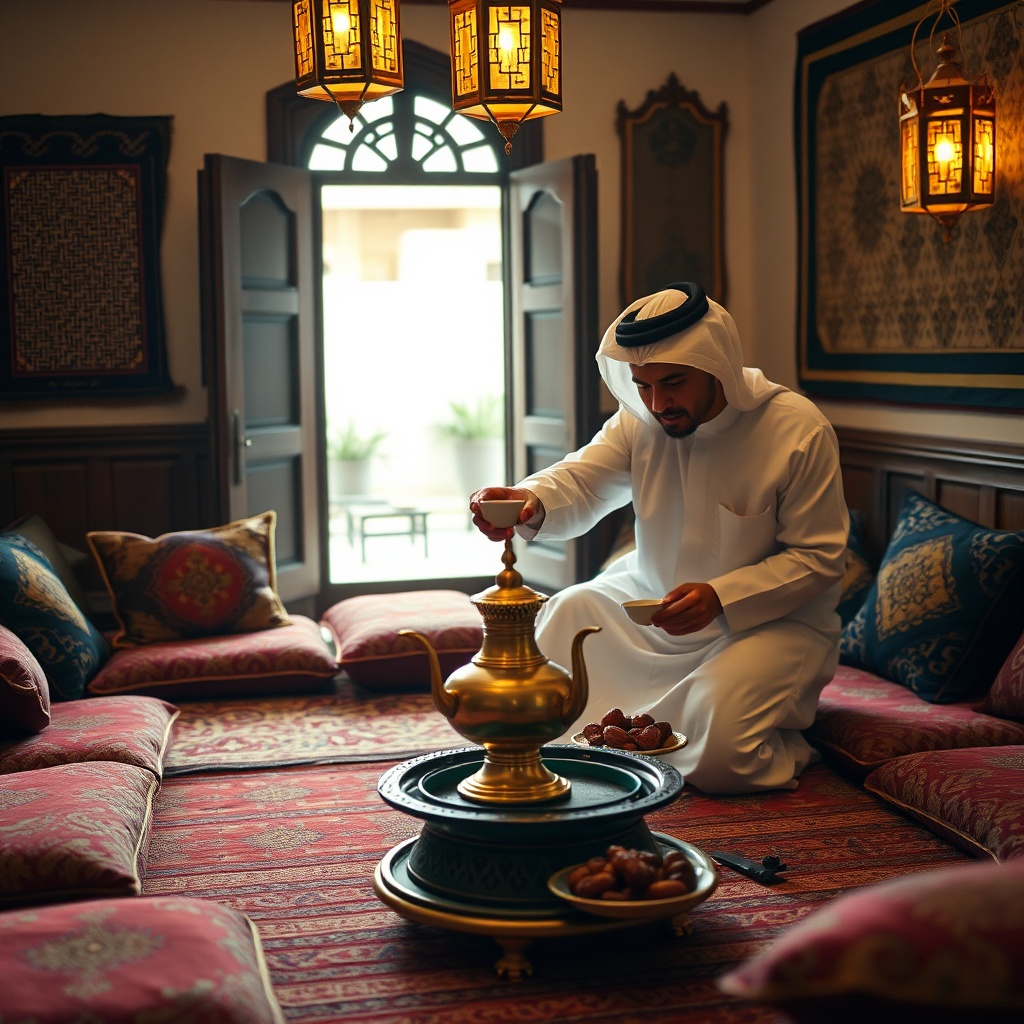
A serene scene of a traditional Kuwaiti majlis, where the ritual of serving Arabic coffee and dates embodies the sacred duty of hospitality.
Kuwaiti culture is the shared way of life of the Kuwaiti people, encompassing their customs, traditions, arts, cuisine, and social norms. It is rooted in the Arabian Peninsula's Bedouin heritage and Islamic faith, but it has been profoundly influenced by Kuwait's role as a historic trading hub. This mercantile past brought diverse influences from Persia, India, East Africa, and the wider Arab world, which have all left their mark on Kuwaiti traditions, dialect, and cuisine.
The Core Pillars: Family, Religion, and Hospitality
Three pillars support the foundation of Kuwaiti culture: family, religion, and hospitality. The family is the primary social unit, and loyalty to it is paramount. Religious values, primarily Sunni Islam, guide daily conduct, from prayer times to ethical business practices. Hospitality, meanwhile, is a point of honor; a host's reputation depends on how generously they receive a guest.
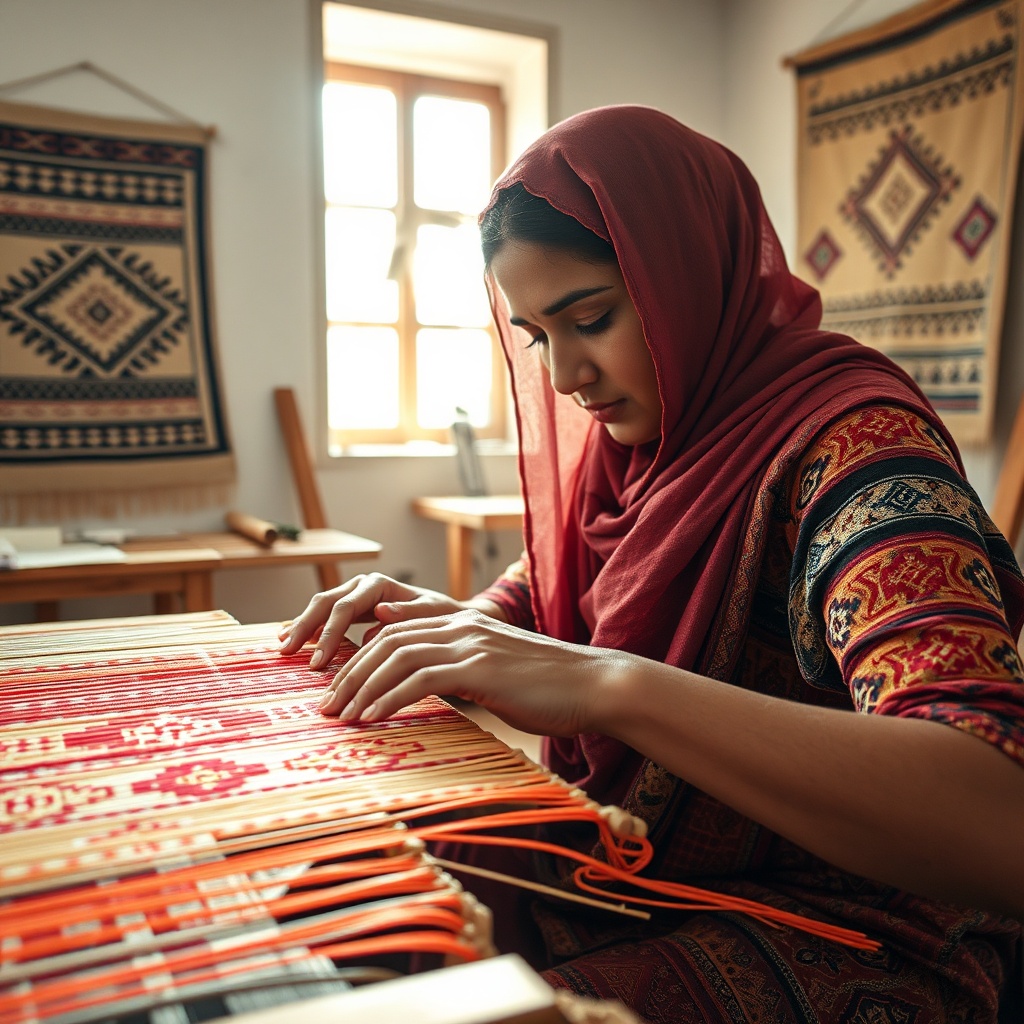
A vibrant depiction of Sadu weaving, a cherished Kuwaiti cultural tradition that keeps Bedouin artistry alive.
The Role of the Majlis in Daily Life
The Majlis is the heartbeat of Kuwaiti social life. It is a dedicated space, often a large room in a home or a separate building, where men (and sometimes women, in separate gatherings) receive guests. The Majlis serves multiple purposes: it is a place for family gatherings, business negotiations, political discussion, and simple socializing. The Diwaniya, a specific type of weekly Majlis gathering, is a unique Kuwaiti institution where men meet to discuss matters of mutual interest, from poetry to politics.
Contemporary Kuwaiti Identity: A Hybrid of Tradition and Modernity
Modern Kuwaiti identity is a dynamic hybrid. The country boasts a highly developed urban infrastructure, a significant expatriate population, and widespread access to global media and technology. Yet, this modernity coexists with a strong desire to preserve cultural heritage. This is visible in the revival of traditional crafts, the popularity of national dress, and the enduring importance of family and tribal connections. Kuwaitis navigate this duality daily, moving seamlessly between the global office and the traditional Majlis.
The Social Fabric: Beyond the Stereotypes of the Gulf
Kuwaiti society is often subject to broad regional stereotypes, but its social fabric is more nuanced. It is a society that values privacy and modesty, yet is also characterized by a lively and expressive communication style. The culture is not monolithic; it is layered with complexities that matter for anyone living in or visiting the country.
The Nuances of Kuwaiti Dialect and Identity
The Kuwaiti dialect is a point of pride and a key marker of identity. It is a distinct form of Gulf Arabic that incorporates loanwords from Persian, Hindi, and English, reflecting the country's trading history. The dialect is a unifying force, but it is also a social indicator, often revealing a person's family background or region.
The Duality of Citizen and Expatriate Communities
Kuwait's population is composed of a minority of citizens and a majority of expatriates. This creates a clear social duality. While the two communities share public spaces and economic life, they largely maintain separate social spheres. Expatriates are welcome to participate in public cultural events and are expected to respect local customs, but they are not typically part of the intimate Majlis or family gatherings of Kuwaiti citizens. This dynamic shapes much of the social interaction in the country.
The Evolving Role of Women in Kuwaiti Society
Kuwaiti women have made significant strides in education, the workforce, and public life. They are highly represented in higher education and have held prominent positions in government and the private sector. However, the role of women is also shaped by traditional expectations within the family and community, creating a complex and evolving social position. Women often have their own Majlis gatherings, which are vibrant centers of social life and community organization.
The Majlis: The Heartbeat of Kuwaiti Social Life
The Majlis is more than a physical space; it is the central social institution of Kuwaiti culture. It is where hospitality is enacted, relationships are built, and social order is maintained. Understanding the Majlis is essential for understanding Kuwaiti society.
Quick Answer: The Majlis is a traditional guest room in a Kuwaiti home where the host receives visitors for coffee, conversation, and socializing, serving as the primary setting for hospitality and community bonding.
Step-by-Step Guide to Majlis Etiquette
Etiquette in the Majlis is a sign of respect. Following these steps will help you navigate the experience smoothly.
- Enter the Majlis with your right foot.
- Greet the host and the most senior person in the room first.
- Accept the Gahwa (Arabic coffee) with your right hand and gently shake the cup to signal you are finished.
- Wait for the host to gesture or invite you to take a seat.
- Remain seated until the host signals the end of the gathering or the conversation naturally concludes.
Formal vs. Informal Majlis: A Comparison
The Majlis can range from a highly formal affair to a casual family gathering, with distinct conventions for each.
| Feature | Formal Majlis | Informal Majlis |
|---|---|---|
| Purpose | Business, diplomacy, large community meetings | Family, close friends, casual socializing |
| Seating | Structured, hierarchical, often facing the host | Relaxed, circular or L-shaped, no strict hierarchy |
| Refreshments | Coffee (Gahwa) and tea, served in strict sequence | Coffee, tea, juices, and often full meals |
| Duration | Short, focused on specific topics | Extended, often lasting several hours |
| Dress Code | Formal national dress (Dishdasha/Bisht) | Casual or semi-formal national dress |
The Architecture and Design of a Traditional Majlis
A traditional Majlis is designed for comfort and hospitality. It often features low seating, such as floor cushions and sofas arranged along the walls, allowing guests to recline comfortably. The room is typically well-lit and ventilated, with a central space for the coffee service. Decorative elements often include traditional Sadu weavings and other local crafts, reinforcing the cultural identity of the home.
The Culinary Traditions: A Taste of Kuwait's Heritage
Kuwaiti cuisine is a reflection of the country's history and environment. It is a blend of desert and maritime influences, characterized by hearty rice dishes, fragrant spices, and fresh seafood. The preparation and sharing of food are central to Kuwaiti hospitality.
The Significance of National Dishes
Kuwait's national dish, Machboos (also known as Kabsa), is a fragrant rice dish cooked with meat or chicken and a complex blend of spices. It is a staple at family gatherings and celebrations. Another iconic dish is Mutabbaq Samak, a fish dish that highlights the country's coastal heritage. These dishes are more than just food; they are a symbol of national identity and tradition.
Definition: Machboos is a traditional Kuwaiti dish of spiced rice and meat, considered the national dish and a centerpiece of festive and family meals.
The Ritual of Arabic Coffee (Gahwa) and Dates
The ritual of serving Gahwa, a light, cardamom-flavored Arabic coffee, is a sacred act of hospitality. It is served in small cups, known as finjan, from a traditional brass pot called a dallah. The host pours the coffee for the guest, who drinks it and shakes the cup when finished to signal they do not want more. Gahwa is always accompanied by dates, which provide a natural sweetness to balance the bitterness of the coffee. Refusing the coffee is considered a breach of etiquette.
Modern Food Trends vs. Traditional Home Cooking
While Kuwaiti cities are full of international restaurants and fast-food chains, traditional home cooking remains the heart of the culinary culture. Modern trends include a renewed interest in heritage recipes and the incorporation of global flavors into Kuwaiti dishes. This is especially visible among younger generations, who are eager to explore both international cuisine and their own culinary roots.
Cultural Etiquette and Communication: Navigating Kuwaiti Social Norms
Understanding the unwritten rules of Kuwaiti etiquette is crucial for both visitors and expatriates. These norms govern everything from greetings to business negotiations and are a reflection of the culture's core values.
The Importance of Respect and Honorifics
Respect is the foundation of all social interactions in Kuwait. This is expressed through the use of honorifics, such as addressing elders and those in positions of authority with titles like "Umm" (mother of) or "Abu" (father of) followed by the name of their eldest son. This practice indicates respect for the individual's family and status. It is also customary to stand when an older or more senior person enters the room and to offer them the seat of honor.
Gift-Giving and Hospitality Rules
Gift-giving is a common way to express gratitude and strengthen relationships, especially when invited to a Kuwaiti home. Gifts should be of good quality and are often given to the host's children. When you are a guest, you are expected to accept the host's hospitality graciously, including food and drink. It is polite to compliment the host's home and food, but to avoid complimenting a specific possession, as it may create an expectation to give it as a gift.
Communication Styles: Indirect vs. Direct
Kuwaiti communication is often indirect and high-context. Meaning is frequently conveyed through tone, context, and nonverbal cues rather than direct words. Saying "no" directly can be considered rude, so Kuwaitis may use phrases like "inshalla" (if God wills) or "we will see" as a polite way to decline. In business settings, it is important to build relationships and trust before discussing the specifics of a deal. Being overly direct or confrontational can damage relationships.
The Evolution of Kuwaiti Culture: Preserving Heritage in a Modern State
Kuwaiti culture is not static; it is in a constant state of evolution. The country is actively working to preserve its heritage while embracing the opportunities of modernity. This effort is visible in cultural institutions, the work of artists, and the daily lives of its people.
The Role of Cultural Institutions and Festivals
Kuwait has established several cultural institutions and festivals dedicated to preserving its heritage. These include museums, cultural centers, and annual events that celebrate Kuwaiti arts, music, and traditions. These institutions play a vital role in educating younger generations and promoting cultural exchange.
The Impact of Social Media on Younger Generations
Social media has had a profound impact on Kuwaiti youth. It provides a platform for them to engage with global trends, express their identities, and connect with peers. At the same time, it is a space where they grapple with their cultural heritage, often creating content that blends traditional elements with modern aesthetics. This has led to a vibrant online culture where Kuwaiti identity is being redefined.
Preserving Traditional Crafts like Sadu Weaving
Sadu weaving is one of the most iconic traditional crafts of Kuwait. It is a form of Bedouin weaving, characterized by bold geometric patterns and bright colors, traditionally used to create tent dividers, camel saddles, and rugs. Today, there are initiatives to preserve and revive this craft, teaching it to younger generations and incorporating it into modern design. It is a powerful symbol of Kuwaiti cultural resilience.
Frequently Asked Questions (FAQ) About Kuwaiti Culture
Is Kuwaiti culture similar to other Gulf cultures?
Yes, Kuwaiti culture shares many similarities with other Gulf Arab cultures, including language, religion, and a strong emphasis on hospitality and family. However, it also has its own distinct characteristics, such as a unique dialect, specific culinary traditions, and a strong maritime heritage that sets it apart.
What is the most important aspect of Kuwaiti hospitality?
The most important aspect of Kuwaiti hospitality is the genuine and generous welcome extended to a guest. This is expressed through the ritual of serving Gahwa and dates, offering the best food, and making the guest feel completely at home. The host's honor is tied to how well they treat their guests.
Can expats participate in traditional Kuwaiti cultural events?
Yes, expats are generally welcome to participate in public cultural events, such as national day celebrations and festivals. They can also experience traditional Kuwaiti culture through museums and cultural centers. However, they are not typically part of the more intimate, private gatherings like a family Majlis.
What is the traditional dress code in Kuwait?
The traditional dress for Kuwaiti men is the Dishdasha, a white, ankle-length robe. For formal occasions, a Bisht, a brown or black cloak trimmed with gold, may be worn over it. Women traditionally wear an Abaya, a black cloak, over their clothing, and some wear a hijab or shayla to cover their hair. Modesty is a key principle in Kuwaiti dress.
How has modern technology impacted Kuwaiti traditions?
Modern technology has had a dual impact on Kuwaiti traditions. On one hand, it provides new platforms for preserving and promoting heritage, such as digital archives and social media channels. On the other, it is changing social dynamics, with digital communication sometimes replacing traditional face-to-face interaction. However, the core values of family, hospitality, and community remain strong.
Related reading: From Tradition To Modern: Kuwait City's Modern Culture · Traditional Kuwaiti Cuisine: 15 Dishes You Must Try
Conclusion
Kuwaiti culture is a living, breathing entity that honors its past while embracing its future. Its essence lies in the balance between the traditional and the modern, the public and the private, the global and the local. For anyone seeking to understand or engage with Kuwait, the path is clear: learn the cultural codes, respect the customs, and embrace the warmth of its hospitality. The next step is to experience it firsthand—by accepting an invitation to a Majlis, tasting a bowl of Machboos, and listening to the stories of its people.
Related Articles
Kuwait City Desert Day Trip: Tour Vs Self-Drive
A Kuwait City desert day trip is a guided or self-driven excursion into the surrounding dunes that combines off-road adventure, cultural experiences, and the raw landscape of the Arabian Peninsula — t...
Kuwait City Vs Dubai: Which City Fits You Best?
Introduction...
Kuwait Cultural Evolution: From Bedouin To Modern
<a href="https://kenzadi.com/">Kuwait cultural evolution</a> is a story of adaptation — a small nation that transformed from a maritime trading hub and Bedouin desert society into a <a href="https://v...